In This Guide
If you have been researching custom shower installations for a new build or a high-end remodel, you have probably run into the term "mud-set shower" and wondered what it actually means. Maybe your contractor mentioned it. Maybe you saw it on a forum. Maybe someone told you it is the only way to build a shower that truly lasts.
They were right.
I have been building mud-set showers for over twenty-two years in Whitefish, Kalispell, and across Montana's Flathead Valley. This is the definitive guide to what a mud-set shower is, how it is built, and why it is still the gold standard for homeowners who demand craftsmanship over convenience.
What Is a Mud-Set Shower?
A mud-set shower is a shower built using a traditional mortar bed as the foundation for the shower floor — and often the walls. The term "mud" is trade shorthand for deck mud, a carefully proportioned mix of sharp sand and Portland cement that is blended with just enough water to hold its shape when compressed in your fist. No more, no less.
This mortar is packed by hand onto the shower substrate, then floated — smoothed and shaped with a flat steel trowel — to create a perfectly sloped surface that directs every drop of water toward the drain. The industry standard is a quarter-inch of fall per linear foot, and achieving that across a complex shower floor, consistently and without low spots, requires years of hands-on training.
"A mud-set shower is not a product you order from a catalog. It is a substrate built by hand, on site, shaped to your exact specifications. That is what makes it superior — and that is what makes it rare."
This technique predates every modern shower system on the market. Before Schluter, before Kerdi, before foam pans and prefabricated shower bases, every quality shower in America was built with a mortar bed. Roman bathhouses used the same fundamental approach. The method endures because it works better than anything that has come after it.
Unlike a foam pan system that comes in a fixed shape and fixed size, a mud-set shower pan can be built to any dimension, any configuration, and any drain location. Curved walls, angled corners, curbless entries, multiple drains, built-in bench seats — mortar accommodates all of it because it is shaped on site, not manufactured in a factory.
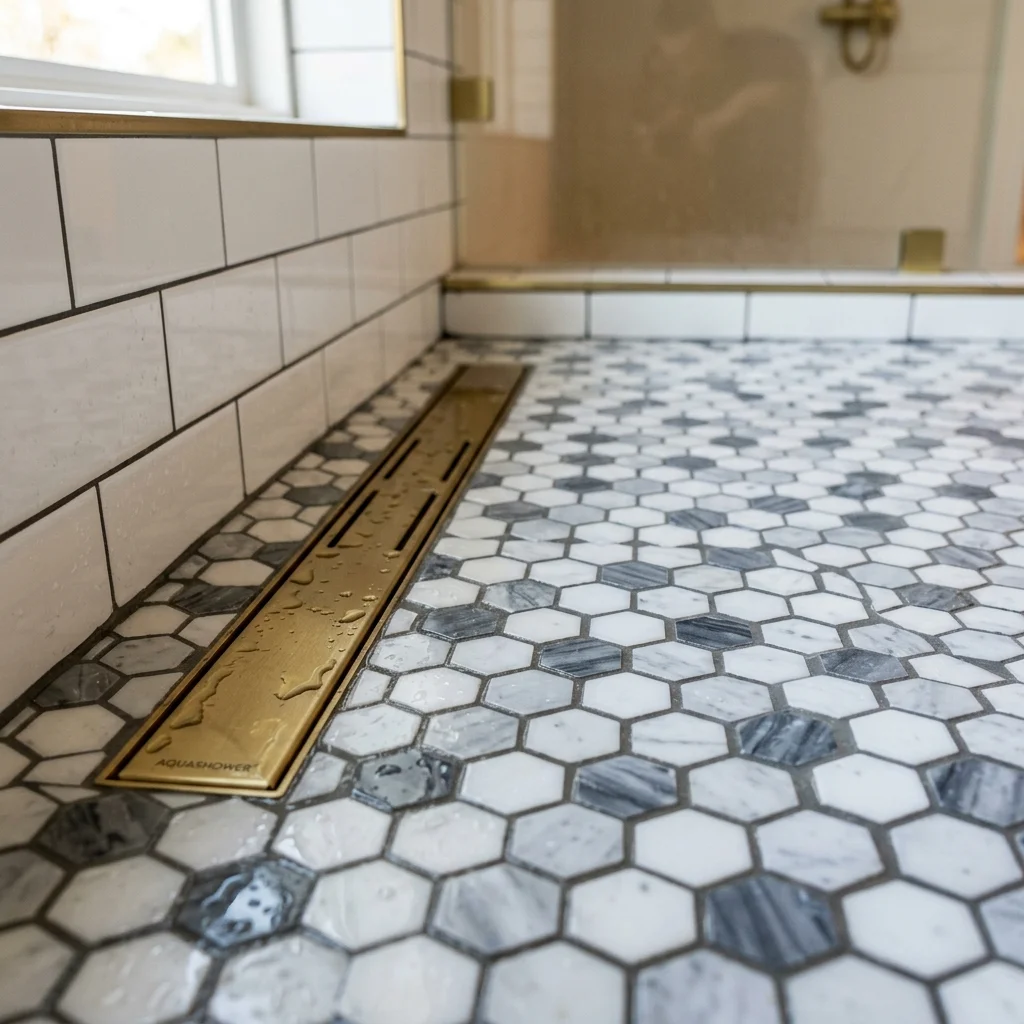
A mortar bed being hand-floated to precise slope specifications — the foundation of every mud-set shower Nautilus builds.
How a Mud-Set Shower Is Built (Step by Step)
Understanding what goes into a mud-set shower helps you understand why it costs more, takes longer, and lasts decades longer than the alternatives. Here is how I build every mud-set shower at Nautilus, from demolition to final grout.
Step 1: Demolition and Substrate Preparation
Everything starts with removing the existing shower or preparing the new framing. The subfloor is inspected down to the joists. Any rot, deflection, or inadequate framing is corrected before a single pound of mortar is mixed. A shower built on a bad subfloor is a shower waiting to fail, regardless of the method used on top. I reinforce with additional blocking and sister joists where needed. This step is not optional — it is foundational.
Step 2: The Pre-Slope
Before the waterproof liner goes in, a layer of mortar is packed over the subfloor to create a preliminary slope toward the drain. This pre-slope serves a critical purpose: any water that eventually makes its way through the grout and tile above — and over years, some always does — hits this sloped surface and is directed to weep holes in the drain assembly. Without a proper pre-slope, that water sits on a flat subfloor and rots the structure. Most foam systems skip this layer entirely. That is a problem most homeowners do not discover until it is too late.
Step 3: The Waterproof Liner
A PVC or CPE waterproof liner is installed directly over the cured pre-slope. This liner is lapped up the walls at least six inches above the finished curb height and carefully folded into the corners without punctures or creases. The liner is clamped into the drain assembly's clamping ring, creating a watertight seal. This is the primary waterproofing layer — the last line of defense between water and your home's structure. Every seam is solvent-welded or sealed with manufacturer-approved methods. There are no shortcuts here.
Step 4: The Mortar Bed
This is where the craft lives. Deck mud — mixed at approximately four parts sharp sand to one part Portland cement — is blended to a "dry pack" consistency and packed by hand over the liner. Using screeds and a flat steel trowel, I float the mortar to a uniform slope of one-quarter inch per foot in all directions toward the drain.
The mortar is packed firmly to eliminate voids, screeded to an even thickness, and finished to a surface flat enough to accept tile without lippage. On a simple rectangular shower, this is straightforward. On a complex multi-angle floor with a linear drain, a corner bench, and a curbless entry, it becomes a geometry problem that only experience can solve. The mortar bed cures for twenty-four to forty-eight hours before the next step.
Step 5: The Waterproof Membrane
After the mortar bed is cured, a liquid-applied waterproof membrane — products like Laticrete Hydro Ban or Custom Building Products RedGard — is rolled or troweled over the entire mortar surface and up the walls. This creates a redundant second waterproofing layer above the mortar. The dual-layer approach means that even if grout cracks or tile chips twenty years from now, water still cannot reach the structure. This is the insurance policy that gives mud-set showers their legendary lifespan.
Step 6: Tile Installation
With the waterproofing cured, tile is set into thin-set mortar over the prepared substrate. Because the mortar bed provides a perfectly flat, rigid, zero-flex surface, the tile sits flush and stays put. There is no flex under foot traffic. No cracked grout lines from substrate movement. The tile is grouted, the perimeter joints are caulked with color-matched sealant, and the shower is complete.
The entire process — from demolition to final grout — typically takes two to three weeks. That timeline exists because each layer must cure fully before the next one begins. Rushing any step compromises the entire system. I do not rush.
Why Luxury Homeowners Choose Mud-Set
In over two decades of working in Whitefish and across the Flathead Valley, I have built showers in lakefront estates, ski chalets, and custom mountain homes. The homeowners who invest in these properties are not looking for the fastest way to get tile on a wall. They want the build quality to match the home.
Here is what a mud-set shower delivers that manufactured systems cannot:
- Any size or shape. No restrictions from pre-manufactured pan dimensions. Your shower is built to your architectural plans, not to a factory's mold catalog.
- Custom slope engineering. Multi-drain layouts, linear drains offset from center, trench drains along doorless entries — mortar accommodates every drainage scenario because the slope is created on site.
- Zero flex. A cured mortar bed is rigid. It does not compress under weight, does not bounce, and does not move. That rigidity eliminates the cracked grout joints that plague foam-based installs within a few years.
- Superior waterproofing. The dual-layer system — liner below the mortar, liquid membrane above — provides redundancy that single-membrane foam systems simply do not offer.
- Longevity. Thirty to fifty years of service life versus ten to fifteen for foam. The math is straightforward. You build it once, or you rebuild it twice.
- Structural integration. Built-in benches, recessed niches, and knee walls are constructed as part of the mortar bed system, not glued onto a foam substrate. They carry real weight and last the life of the shower.
"People do not choose a mud-set shower because it is fashionable. They choose it because they have done their homework, they understand the difference, and they want the shower built right the first time."
Mud-Set vs. Foam: At a Glance
If you are weighing your options, here is a direct comparison. For a deeper dive, read our full guide: Mud-Set Showers vs. Foam Shower Systems.
| Factor | Mud-Set Shower | Foam Pan System |
|---|---|---|
| Substrate Rigidity | Zero flex — rigid cured mortar | Compresses under load over time |
| Custom Shapes | Any size, shape, or angle | Limited to manufactured dimensions |
| Waterproofing | Dual-layer (liner + membrane) | Single-layer membrane |
| Expected Lifespan | 30–50+ years | 10–15 years |
| Installation Time | 2–3 weeks | 3–5 days |
| Skill Required | Years of apprenticeship | Can follow manufacturer instructions |
| Best For | Custom, luxury, and forever homes | Standard layouts and rental properties |
Who Still Does This Work?
Here is the honest truth: mud-set construction is a dying art. And that matters to you as a homeowner more than you might realize.
When I started in this trade over twenty-two years ago, mortar work was still the standard. Every tile contractor knew how to float a mud bed. Today, fewer than ten percent of tile installers in the United States can do it competently. The reasons are straightforward:
- Foam is faster. A foam pan can be installed in half a day. A mortar bed takes two to three days including cure time. Contractors make more money per hour on foam.
- Training has shifted. Manufacturer certification programs — Schluter, Laticrete, TCNA — now focus almost entirely on modern products. Young installers learn to cut foam board and apply band membrane, not to float mortar.
- The skill gap is real. Floating a shower pan is not something you learn from a video or a weekend class. It takes hundreds of repetitions under the guidance of someone who already knows how. That kind of apprenticeship barely exists anymore.
The result is that most contractors do not offer mud-set work because they cannot do it. Some will tell you foam is "just as good." It is not. It is faster, it is easier, and it is adequate for standard applications. But adequate is not what you are looking for when you are building or remodeling a home you plan to live in for decades.
If a contractor tells you mud-set is "outdated" or "unnecessary," ask them when they last floated a mortar bed. The answer will tell you everything you need to know.
Mud-Set Showers in Montana
Montana's Flathead Valley presents conditions that make traditional construction methods not just preferable, but important. Here is what I account for on every project in Whitefish, Kalispell, Columbia Falls, and the surrounding area:
- Temperature swings. Winter temperatures in the Flathead Valley regularly drop below zero, and homes cycle between heated interiors and frigid crawlspaces. Materials expand and contract. A rigid mortar bed handles this stress better than foam, which compresses and does not fully recover its shape.
- Dry winter air. Forced-air heating creates very low indoor humidity during Montana winters. This affects mortar cure rates and grout drying times. I adjust the water content in my mortar mix and control the cure environment to prevent the mortar from drying too quickly, which causes surface cracking and weakened bonds.
- Seasonal construction schedules. Many custom homes and bathroom remodels in the Flathead Valley happen on tight seasonal timelines. Mud-set work requires the space to be heated to at least 50°F throughout curing. I plan around this, ensuring mortar and thin-set cure under proper conditions regardless of what the weather is doing outside.
- Longevity expectations. Homeowners in this market build homes they plan to keep. Second homes, retirement properties, multi-generational mountain estates — these are not five-year flip projects. The thirty-to-fifty-year lifespan of a mud-set shower matches the expectations of Flathead Valley homeowners in a way that foam simply cannot.
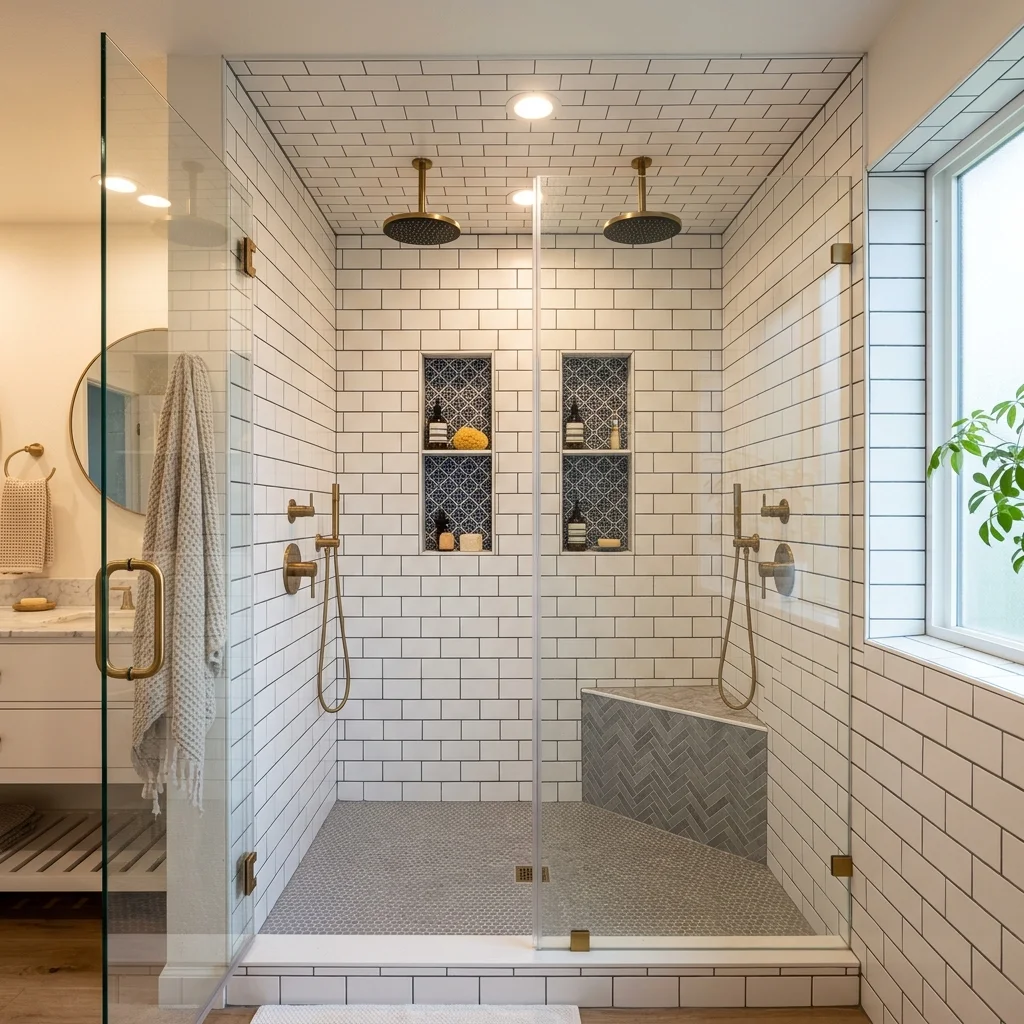
A completed mud-set shower in a Flathead Valley custom home — built to last the life of the house.
How Long Does a Mud-Set Shower Last?
A properly built mud-set shower with correct waterproofing will last thirty to fifty years or more. I have torn out mud-set showers from the 1970s that were still structurally sound — the mortar bed was intact, the liner was holding, and the only reason for the remodel was aesthetic. The homeowner wanted new tile. That is the kind of performance you get from traditional construction.
By comparison, foam pan systems and prefabricated shower bases typically show signs of failure within ten to fifteen years. Common failure modes include:
- Foam compression under repeated loading, creating low spots that pond water
- Cracked grout joints from substrate flex
- Membrane delamination at seams and transitions
- Drain seal failure from substrate movement
When a foam system fails, you are looking at a full tear-out and rebuild. When a mud-set shower's tile wears out after three decades, you strip the tile, inspect the mortar bed and waterproofing, and retile over the same substrate. The foundation survives because it was built to survive.
"The best compliment I have ever received was from a homeowner who called me twenty years after I built their shower. They said it still looked and performed like the day I finished it. That is why I do this work the way I do."
When to Choose a Mud-Set Shower
Key Takeaway
Choose a mud-set shower when:
- You are building a custom home or remodeling a bathroom you plan to use for decades
- Your shower design requires a non-standard size, shape, slope, or drain configuration
- You want built-in bench seats, recessed niches, or structural features integrated into the shower
- You want the most durable, rigid substrate possible for natural stone or large-format tile
- You want dual-layer waterproofing for maximum structural protection
- You value craftsmanship and longevity over speed and cost savings
A foam system is fine for a standard guest bathroom or rental property where ten to fifteen years of service life is acceptable. For anything you expect to last — choose mud-set.
If you are considering a mud-set shower for your home in Whitefish, Kalispell, or anywhere in the Flathead Valley, I would be glad to walk you through the process and show you examples of our work. Visit our mud-set shower installation page for more details on what we offer, or read our comparison guide on mud-set vs. foam shower systems.