What Is Venetian Plaster?
Venetian plaster is an ancient wall finishing technique that transforms ordinary walls into surfaces with the luminous depth and movement of polished marble. The material itself is deceptively simple — slaked lime putty combined with finely crushed marble dust — but the technique required to apply it correctly has been handed down through generations of Italian craftsmen for over two thousand years.
The origins trace back to ancient Rome, where builders discovered that mixing lime with marble powder created a durable, decorative coating that could mimic the appearance of solid marble at a fraction of the weight and cost. Roman architects used it extensively in villas, temples, and public buildings. The technique was rediscovered and refined during the Italian Renaissance, when master plasterers in Venice developed the multi-layer application methods that give the material its modern name — stucco veneziano.
What makes Venetian plaster extraordinary is what happens when light hits the finished surface. Each layer of plaster contains translucent marble particles. When applied in multiple thin coats at varying angles, these particles create a surface that light penetrates and reflects from within, producing a glow that shifts and changes throughout the day. It is not a flat color. It is not a texture. It is depth — the same optical quality that makes natural marble so captivating.

Venetian plaster creates a luminous surface with depth and movement that changes with the light throughout the day.
"Venetian plaster is not a product you apply. It is a technique you master — or you don't. The material rewards experience and punishes shortcuts."
Types of Decorative Plaster Finishes
The term "Venetian plaster" is often used as a catch-all, but it actually describes a family of related decorative plaster finishes, each with its own composition, texture, and visual character. Understanding the differences helps you choose the right finish for your space.
| Plaster Type | Composition | Finish | Best For | Relative Cost |
|---|---|---|---|---|
| Venetian (Polished) | Lime putty + fine marble dust | High-sheen, mirror-like | Living rooms, dining rooms, master bedrooms | $$$ |
| Marmorino | Lime putty + coarser marble aggregate | Stone-like texture, polished or matte | Accent walls, fireplace surrounds, entryways | $$$ |
| Stucco Lustro | Lime putty + ultra-fine marble dust | Glass-like depth, each layer burnished individually | Formal spaces, feature walls, luxury bathrooms | $$$$ |
| Tadelakt | Moroccan lime plaster + olive oil soap | Smooth, waterproof, organic | Showers, wet rooms, sinks, bathtub surrounds | $$$$ |
| Lime Plaster | Lime putty + sand (no marble) | Soft matte, chalky, rustic | Whole-home applications, rustic interiors, ceilings | $$ |
Marmorino plaster uses coarser marble particles than traditional Venetian plaster, creating a surface with a distinctly stone-like character. It can be polished to a high gloss or left matte depending on the desired effect. Stucco Lustro sits at the opposite end of the spectrum — ultra-fine marble dust applied in multiple thin layers, with each individual layer burnished before the next is applied. The result is a surface with extraordinary depth that is virtually indistinguishable from polished marble. It is the most labor-intensive finish and requires the highest level of skill.
Tadelakt is a traditional Moroccan technique that creates a completely waterproof surface through burnishing with olive oil soap and polished river stones. Unlike other plaster finishes that need sealing to handle moisture, tadelakt is inherently waterproof, making it suitable for direct water contact in showers and wet rooms. Lime plaster uses sand instead of marble dust, producing a softer, more rustic finish that works beautifully in whole-home applications where the goal is warmth and texture rather than high polish.
The Application Process
Venetian plaster is applied in a minimum of three layers — and often four or five — to achieve the desired depth. Each layer serves a specific purpose, and the entire process requires patience that most modern construction schedules simply don't allow for.
Layer one is a thin skim coat that bonds to the prepared wall surface and establishes the base tone. This coat must dry completely — typically 24 hours — before anything else touches the wall. Layer two builds thickness and begins to create the characteristic variation in the surface. The plasterer works the steel trowel at different angles and pressures, leaving subtle ridges and valleys that will become part of the final texture. Subsequent layers add more depth, more marble content, and more visual complexity.
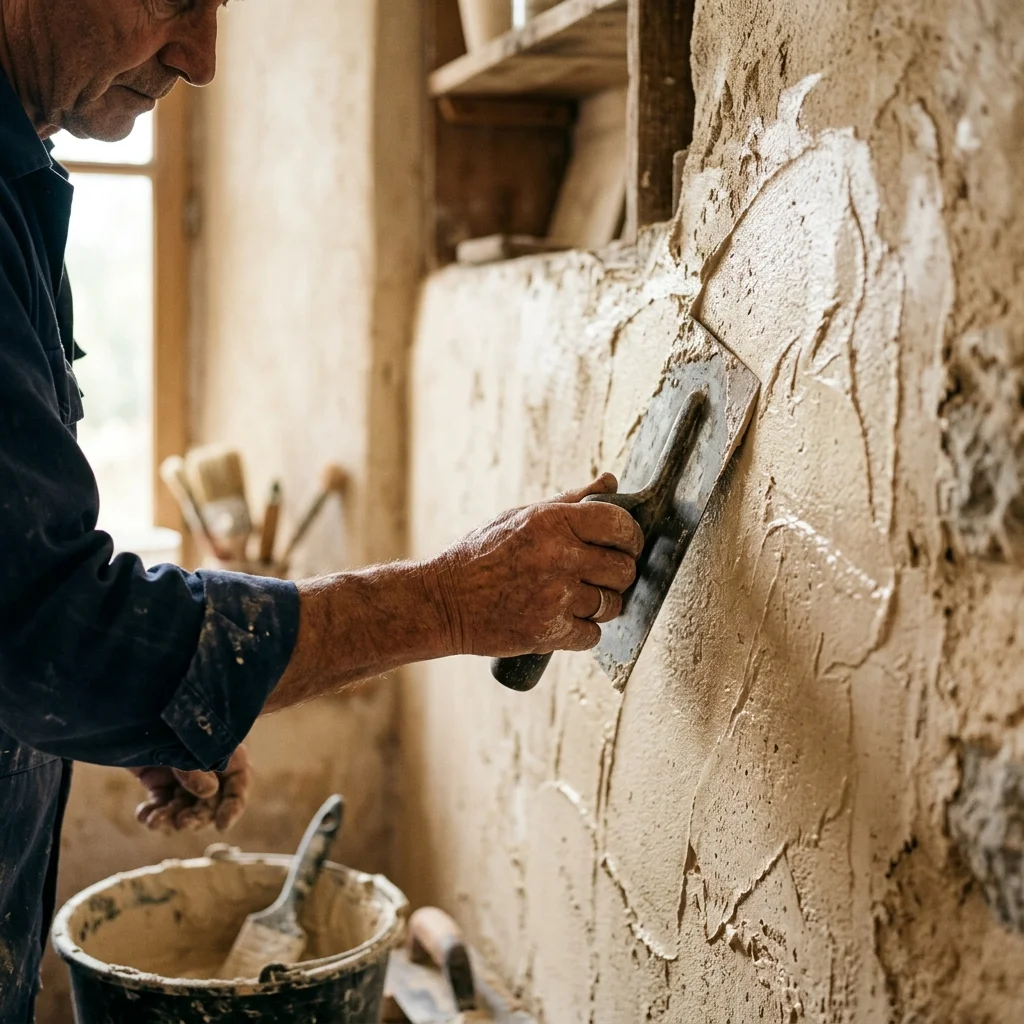
The final layer is where everything comes together. For a polished finish, the plaster is burnished with the flat of the trowel using firm, overlapping strokes that compress the marble particles and bring out the natural sheen. The pressure must be consistent. The angle must be precise. Too much force damages the underlying layers. Too little produces no polish. This is where years of practice separate a craftsman from someone who watched a tutorial.
Every Stroke Matters
There is no machine that applies Venetian plaster. Every wall is finished entirely by hand — one trowel stroke at a time. The pressure, angle, speed, and moisture content of every single stroke affects the final appearance. Two people using the same material on the same wall will produce noticeably different results.
Why Venetian Plaster Outperforms Paint
Paint is a thin film that sits on top of a wall. Venetian plaster is a thick, multi-layered mineral coating that becomes part of the wall itself through a chemical process called carbonation. As the lime in the plaster absorbs carbon dioxide from the air, it slowly converts back into calcium carbonate — essentially turning back into limestone. This means the plaster actually gets harder and more durable over time.
The practical differences are significant:
- Durability: Paint chips, peels, scuffs, and fades. Venetian plaster can last the lifetime of the building. Many Italian palaces still have their original plaster walls after centuries.
- Depth: Paint produces a flat, single-plane color. Venetian plaster creates a three-dimensional surface with light, shadow, and movement that shifts throughout the day.
- Breathability: Paint creates a vapor barrier that traps moisture inside walls, leading to mold and peeling. Venetian plaster is naturally breathable — moisture passes through rather than becoming trapped.
- Moisture regulation: Lime plaster absorbs excess humidity from indoor air and releases it when conditions are dry, creating a natural humidity buffer that paint cannot provide.
- Mold resistance: The highly alkaline composition of lime plaster (pH 12+) naturally inhibits mold and mildew growth without chemical additives.
"I've seen paint jobs that looked tired after three years. I've seen Venetian plaster walls that looked better after thirty. The material actually improves with age — you can't say that about anything in a paint can."
Venetian Plaster in Montana
Montana's climate creates conditions that most wall finishes struggle with — and where Venetian plaster quietly excels. The Flathead Valley experiences extreme temperature swings, bone-dry winters with forced-air heating, and significant temperature differentials between heated indoor air and frigid outdoor air. These conditions create real problems for painted walls.
When warm, humid indoor air meets cold exterior walls, condensation forms inside the wall assembly. Paint traps this moisture, creating the conditions for mold growth, peeling, and paint failure. Venetian plaster allows moisture vapor to pass through the wall rather than trapping it, preventing the condensation buildup that plagues painted homes throughout the valley during the long winter months.
The breathability also works in reverse. During dry Montana winters — when indoor humidity can drop below 20% with forced-air heating — lime plaster releases stored moisture back into the air, acting as a natural humidity buffer. This is the same reason historic European buildings with lime plaster walls feel comfortable without modern HVAC systems. It is a material that was designed for real-world conditions, not laboratory conditions.
Venetian plaster's natural breathability makes it particularly well-suited for Montana's extreme seasonal temperature swings.
Where to Use Venetian Plaster
Venetian plaster works in virtually any interior space. The most common applications we install throughout the Flathead Valley include:
- Bathrooms: Naturally mold-resistant and breathable, Venetian plaster handles bathroom humidity gracefully. Paired with custom tile in a shower area, it creates a spa-like atmosphere. See our bathroom remodeling work for examples.
- Accent walls: A single feature wall in a living room or bedroom is the most popular entry point. It adds visual weight and character without committing an entire room.
- Fireplace surrounds: Venetian plaster around a fireplace creates a focal point with the presence of natural stone. Marmorino is especially striking in these applications.
- Whole rooms: Living rooms, dining rooms, and master bedrooms finished entirely in Venetian plaster have a quiet, enveloping quality that no paint color can replicate.
- Ceilings: Often overlooked, plastered ceilings add a finished quality to a room that draws the eye upward and makes the entire space feel considered and complete.
- Kitchens: Tadelakt or sealed Venetian plaster behind ranges and near sinks provides a seamless, grout-free alternative to traditional backsplash materials.
Cost Expectations
Venetian plaster is a premium wall finish, and the cost reflects the material quality, the number of layers required, and the skilled hand labor involved. Here is what to expect for professionally applied Venetian plaster in Montana:
- Per square foot: $8 – $25, depending on finish type, number of layers, and complexity
- Single accent wall: $1,500 – $4,000
- Full room: $5,000 – $15,000+
Several factors affect where your project falls within those ranges. Stucco Lustro and tadelakt are the most expensive because each layer is individually burnished and the process takes significantly longer. Simple lime plaster in a matte finish is the most affordable option. The condition of your existing walls matters too — walls that need extensive prep work (skim coating, crack repair, priming) will add to the total cost.
Cost in Context
A high-quality paint job on a living room accent wall might cost $300 – $600 and need to be redone in 5 – 7 years. A Venetian plaster accent wall at $1,500 – $4,000 will last the lifetime of the building, look dramatically better, and never need repainting. Over 20 years, the plaster actually costs less — and delivers incomparably more.
Maintenance and Care
One of the practical advantages of Venetian plaster is how little maintenance it requires once properly applied and sealed.
- Cleaning: Dust with a soft, dry cloth or lightly damp microfiber. Avoid abrasive cleaners, harsh chemicals, or scrub brushes that can damage the burnished surface.
- Sealing: Most Venetian plaster walls are sealed with a natural wax or a breathable sealer after application. In bathrooms and kitchens, the sealer provides moisture protection while maintaining breathability. Re-waxing every few years keeps the finish fresh.
- Repairs: Small chips, cracks, or scuffs can be repaired seamlessly. The damaged area is filled, re-burnished, and blended to match the surrounding surface. Unlike paint touch-ups that never quite match, plaster repairs can be made virtually invisible.
- Longevity: A properly applied Venetian plaster wall will outlast the building it is in. The carbonation process means the plaster actually hardens and strengthens over decades.
Why Most Contractors Can't Do This
This is the part that matters most, and the part that most websites won't tell you: Venetian plaster is not something you learn in a weekend workshop.
The technique requires years of dedicated practice to develop the hand control, material intuition, and visual judgment necessary to produce consistent, high-quality results. The plasterer must understand how humidity and temperature affect drying time, how different substrates absorb moisture at different rates, how to build up layers that create maximum depth without overworking the surface, and how to burnish a final coat to a uniform polish without tearing through to the layer below.
Most general contractors who offer "Venetian plaster" are applying synthetic acrylic products that mimic the look at a surface level but lack the depth, breathability, and longevity of real lime-based plaster. The results look flat, plastic, and uniform — the opposite of what authentic Venetian plaster is supposed to be.
"There are no shortcuts with this material. Either you've spent years learning how the lime responds to your trowel, or you haven't. The wall tells the truth every time."
At Nautilus Design and Build, Levi Shewalter has applied authentic lime-based Venetian plaster for over 22 years. Every project uses traditional materials — real slaked lime putty and natural marble dust — applied by hand with the same methods Italian craftsmen have used for centuries. The difference between genuine artisan plaster and a synthetic imitation is visible from across the room.
Key Takeaway
The Bottom Line
Venetian plaster is an ancient, lime-based wall finish that creates surfaces with the depth and luminosity of polished marble. It outperforms paint in every measurable way — durability, breathability, mold resistance, moisture regulation, and longevity. It is especially well-suited for Montana homes, where its breathable composition prevents the condensation and mold issues that plague painted walls during cold winters. But the material is only as good as the hands that apply it. This is a craft that takes years to learn and a lifetime to master. If you are considering Venetian plaster for your Flathead Valley home, work with someone who has real experience with authentic lime-based materials — not a synthetic imitation.